


Toynbees Industrial Revolution
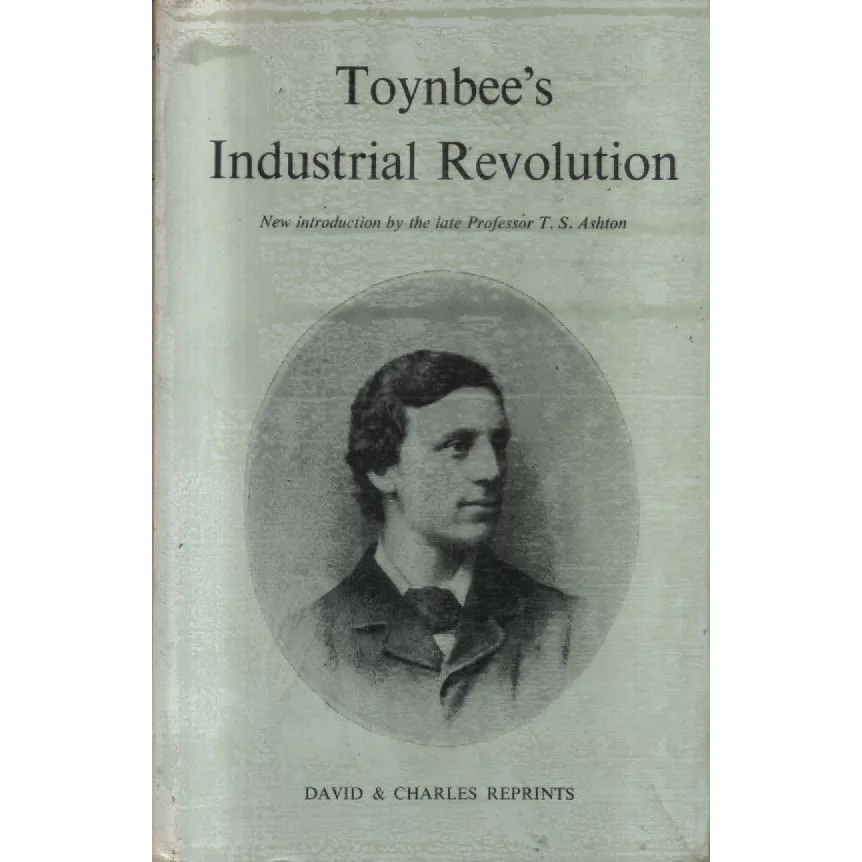
Publisher: David and Charles
Format: Hardback
ISBN: none
Oil your loom, prime your steam whistle, and bring a pencil sharp enough to threaten a tariff. Toynbee’s Industrial Revolution (1969) by Arnold Toynbee—reissued by David and Charles—is the brisk, brainy field guide to the historical moment when Britain discovered that time is money and promptly put both on rails. This is the compact thunderclap that turned cottage industries into factory districts, apprentices into shift workers, and the word “improvement” into a national temperament with soot under its nails.
Toynbee (the lecture-hall firebrand, not the 12-volume universal-historian cousin) gives you the economic remix: enclosures, wages, prices, population curves that climb like a ladder someone forgot to stop, and a parade of inventions that hum, clatter, and occasionally explode. He has that rare historian’s gift of sounding like an accountant with a poet’s eyebrows—sums that add up, and sentences that tap their foot. Expect charts in prose, statistics with opinions, and a rolling argument that asks whether progress arrived as prosperity or as a bill presented to the poor first.
Inside, expect:
-
Cotton’s meteoric career: from domestic whirr to mill-town thunder, complete with water frames, mules, and the looming romance of red-brick.
-
Coal as destiny: a black sparkle that warms parlours, powers pistons, and turns landscapes into very practical Grand Guignol.
-
Wages, prices, and morals: the kind of graphs you feel in your shoes, as the cost of bread debates the price of virtue.
-
Enclosure with decorum: fields hedged, commons vanished, productivity up, tempers… mixed.
-
Reformers and contrarians: men with pamphlets, women with fortitude, children with small hands and large shifts—plus the early union of grumble and hope.
Toynbee’s tone is confident but not pompous; he stacks evidence like bricks and leaves just enough mortar for you to nod. The book is small enough to fit in a coat pocket and large enough to pick a fight at dinner. Read it and you’ll hear the old world’s handloom sigh, the new world’s flywheel sing, and Parliament rummaging for the correct statute to pretend it planned all this.
Copy specifics, proudly practical: This is an ex-library veteran, complete with plastic protective cover—the bibliographic equivalent of a pitman’s helmet. Translation: Condition: Good with institutional resilience. The spine stands square, the pages read clean, and the cover will shrug off tea, drizzle, and moral panic. There may be the faint romance of stamps and pockets—the sort of marginalia that says “I once lived on a serious shelf and was borrowed by determined people.”
Vital stats for your industrial-strength bookshelf:
-
Title: Toynbee’s Industrial Revolution
-
Author: Arnold Toynbee
-
Publisher: David and Charles, 1969
-
ISBN: none (older than barcodes, newer than Watt)
-
Condition: Good, ex-library with plastic protective cover (sturdy, roadworthy, ready for factory conditions)
-
Vendor: Crappy Old Books—the name wears a cloth cap; the stock keeps good time.
Buy it for the argument; keep it for the aftertaste—that brisk sense that the modern world didn’t arrive, it spun up. After a few chapters you’ll be diagnosing office life in mill terms (“management = engine house, me = mule”), checking the weather for coal, and referring to your commute as “increasing the velocity of capital.” Also: thanks to that library armour, you can read it on a bus, in a drizzle, or atop a metaphorical slag heap without fear. Progress, now with a wipe-clean jacket.
Keep browsing: See more History books Other books by Arnold Toynbee
